
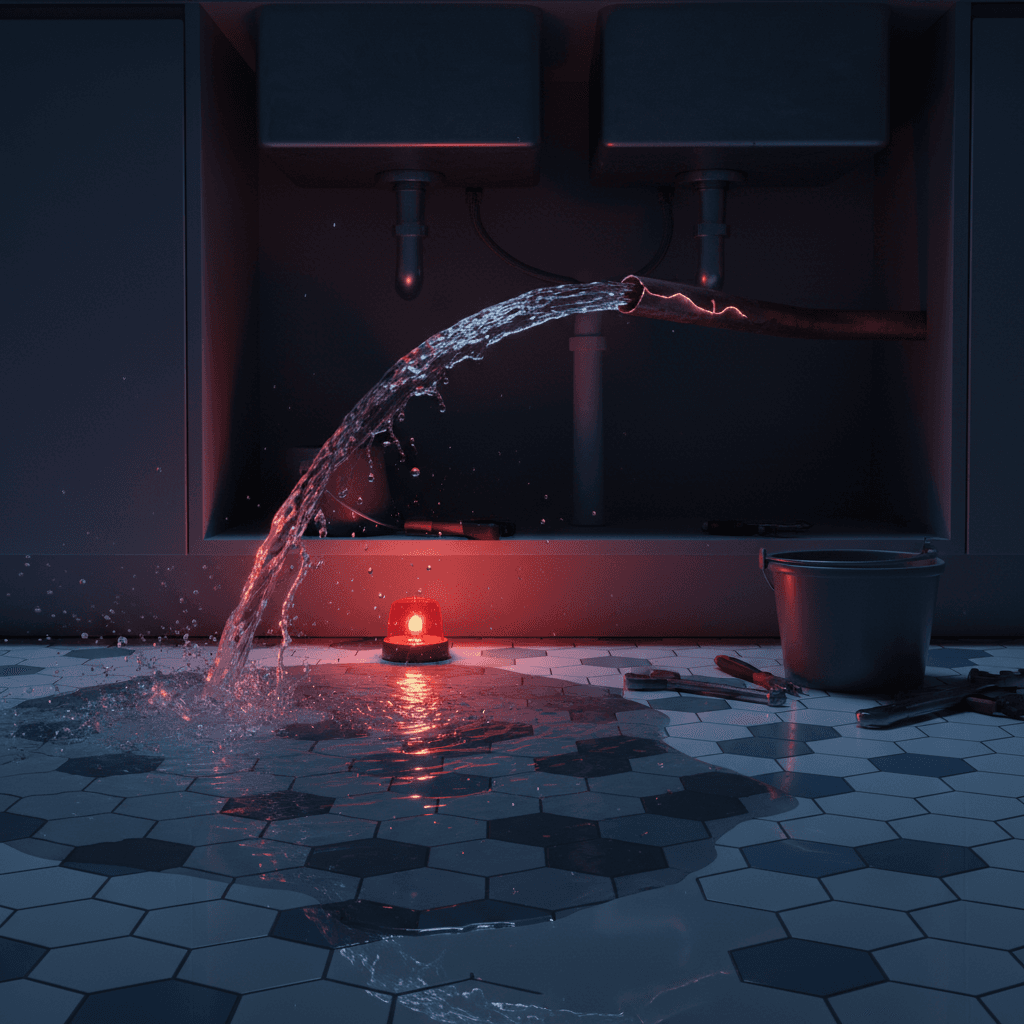
Step 1: Turn Off the Main Water Supply
The very first thing you need to do is stop more water from flowing. Locate your main water shutoff valve — in most Brisbane homes, this is at the water meter near the front boundary of your property. Turn the valve clockwise until it is fully closed. If you cannot find it or it is stuck, look for an isolation valve closer to where the leak is. Every household member should know where the main shutoff is before an emergency happens. In Queensland, the meter box is usually a small concrete or plastic cover near the footpath or driveway.
- •Main shutoff valve is usually at the water meter near the front boundary
- •Turn the valve clockwise to close it
- •If the valve is stuck, use pliers or a valve key
- •Also turn off the hot water system to prevent damage to the unit
Step 2: Minimise Water Damage
Once the water is off, focus on limiting the damage. Move furniture, electronics, documents, and valuables away from the affected area. Use towels, blankets, and buckets to soak up and contain standing water. If water is coming through the ceiling, poke a small hole in the centre of the bulge to release it in a controlled way into a bucket — otherwise the weight of the water can bring down an entire section of ceiling. Open doors and windows to start air circulation, and if you have a wet-dry vacuum, use it to remove standing water.
- •Move furniture and electronics away from water
- •Use towels and buckets to contain water
- •If ceiling is sagging, poke a small drain hole over a bucket
- •Open windows for ventilation to prevent mould
- •Use a wet-dry vacuum if available
Step 3: Call an Emergency Plumber
With the water stopped and damage minimised, call an emergency plumber. Brisbane has many 24/7 plumbing services, and through UrgentTradie you can be connected with a verified emergency plumber in your suburb within minutes. When calling, provide your address, describe the location and severity of the leak, mention if you have turned off the water, and ask for an estimated arrival time and callout fee. Most emergency plumbers in Brisbane will arrive within 30 to 60 minutes during overnight hours, though response times can be longer during storms or widespread flooding events.
- •Call an emergency plumber or use UrgentTradie for fast connection
- •Provide your address and describe the leak location
- •Mention that you have turned off the water supply
- •Ask for estimated arrival time and callout fee upfront
Step 4: Document Everything for Insurance
Before any cleanup or repair, take photos and videos of the damage from multiple angles. Document the burst pipe itself, water damage to floors, walls, and ceilings, and any damaged belongings. Keep receipts for any emergency expenses including the plumber's invoice, temporary accommodation if needed, and cleaning supplies. Contact your home insurance provider as soon as possible — most policies have a time limit for reporting claims. Note that sudden burst pipes are typically covered by home insurance, but gradual leaks or lack of maintenance may not be.
- •Take photos and videos of all damage before cleanup
- •Document the burst pipe location and the affected areas
- •Keep all receipts (plumber, cleaning, temporary accommodation)
- •Contact your insurer within their reporting timeframe
- •Sudden bursts are usually covered; gradual leaks may not be
Common Causes of Burst Pipes in Brisbane
While Brisbane does not experience freezing temperatures like southern states, pipes still burst for several reasons. Corrosion is the leading cause, especially in older homes with galvanised steel or copper pipes that have been in service for decades. High water pressure — anything over 500 kPa — puts constant stress on pipes and fittings. Tree root intrusion can crush or crack underground pipes. Ground movement from Brisbane's reactive clay soils, particularly after wet-dry cycles, can stress pipe joints. And ageing flexible braided hoses under sinks and behind washing machines are a common failure point — these should be replaced every 5 to 10 years.
- •Corroded galvanised steel or ageing copper pipes
- •High water pressure (over 500 kPa)
- •Tree root intrusion into underground pipes
- •Ground movement in reactive clay soils
- •Ageing flexible braided hoses (replace every 5–10 years)