
The Emergency Premium: Why It Exists
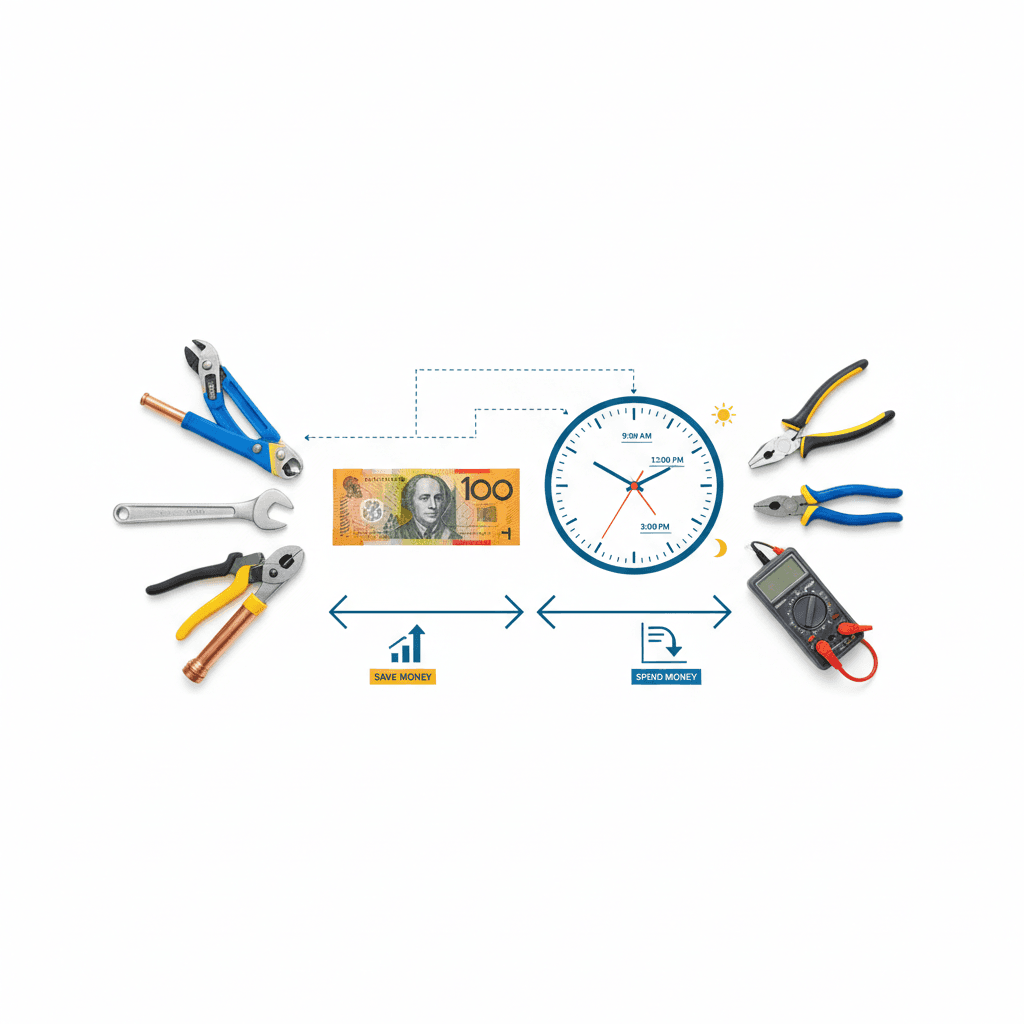
The after-hours or emergency premium is not just tradies charging more because they can. It reflects genuine additional costs. The tradie is sacrificing personal or family time — evenings, weekends, or holidays. They may need to carry a broader range of parts in their van to handle unexpected jobs without being able to visit a supplier. Travel may take longer outside peak service hours as they are coming from home rather than already being in the field. They may also incur additional insurance costs for after-hours work. For larger companies with an on-call roster, the premium covers the cost of paying staff to be available around the clock. Understanding this makes it easier to see the premium as fair, and also to make better decisions about when to pay it vs when to wait.
Premium Breakdown by Trade
Each trade has a different premium structure based on demand patterns and the nature of emergencies. Plumbers have the highest demand after hours — burst pipes and sewage backups are time-critical and cannot be delayed. Emergency plumber callouts in Brisbane run $250 to $350 vs $150 to $200 standard, a premium of roughly 65% to 75%. Electricians see strong after-hours demand for safety switch issues and power outages, with callouts of $200 to $300 vs $130 to $180 standard, around 55% to 65% premium. Locksmiths actually have their busiest period after hours (lockouts peak on weekend evenings), charging $150 to $250 vs $80 to $150 standard, a premium of around 60% to 90%. HVAC technicians see seasonal emergency demand, with callouts of $200 to $350 vs $120 to $200 standard, around 65% to 75% premium.
- •Plumber: $250–$350 AH callout vs $150–$200 standard (~70% premium)
- •Electrician: $200–$300 AH callout vs $130–$180 standard (~60% premium)
- •Locksmith: $150–$250 AH callout vs $80–$150 standard (~75% premium)
- •HVAC tech: $200–$350 AH callout vs $120–$200 standard (~70% premium)
When the Premium Is Justified
The emergency premium is justified when delay would cause greater cost or risk. For plumbing: active flooding causes damage measured in thousands of dollars per hour — a $200 premium is cheap insurance. Sewage backups are a health hazard that worsens over time. Gas leaks are a safety emergency. For electrical: a total power outage means no lights, no fridge (food spoilage), no security system, and potentially no medical equipment. Burning or sparking electrical faults are fire risks. For locksmithing: being locked out late at night in an unsafe area is a personal safety issue, especially for women and elderly people. For HVAC: AC failure during a Brisbane heatwave poses genuine health risks for elderly residents, young children, and people with medical conditions. In all these cases, paying the premium is not just worth it — it is the smart financial and safety decision.
- •Plumbing: flooding, sewage, or gas — always worth calling
- •Electrical: total power loss, fire risk — always worth calling
- •Locksmith: personal safety at night — always worth calling
- •HVAC: heatwave with vulnerable people — always worth calling
Tips to Reduce Your Emergency Tradie Costs
While you cannot avoid the premium entirely when you need an emergency tradie, you can minimise costs. Know where your shutoffs are — water mains, gas meter, and main electrical breaker. Being able to isolate the problem quickly reduces damage and may reduce the scope (and cost) of the repair. Maintain your home systems proactively — annual plumbing inspections, AC servicing, and electrical safety checks catch problems before they become emergencies. Keep a list of trusted tradies for each trade so you are not Googling desperately at midnight and potentially overpaying the first person who answers. Use UrgentTradie, which connects you with pre-vetted tradies at transparent pricing — no surge pricing or desperation markups. Finally, check your home insurance covers emergency repairs — some policies include benefits for burst pipes, storm damage, and lock replacements that can offset the callout cost.
- •Know your shutoffs: water mains, gas meter, electrical breaker
- •Annual maintenance catches problems before emergencies
- •Keep a pre-saved list of trusted tradies for each trade
- •Use UrgentTradie for transparent, pre-vetted pricing
- •Check home insurance for emergency repair coverage