
What Is a Safety Switch and Why Does It Trip?
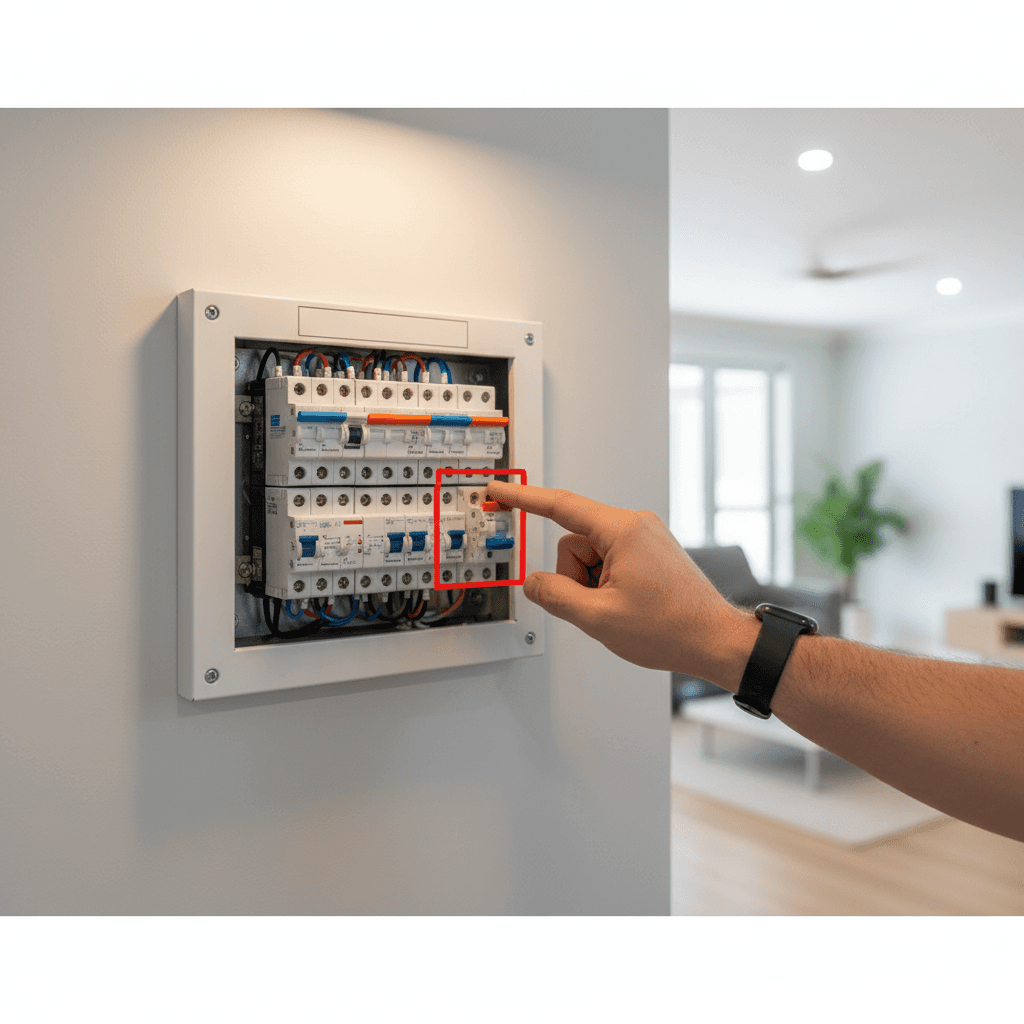
A safety switch (also called an RCD or residual current device) is a life-saving device in your switchboard that monitors the flow of electricity through a circuit. If it detects even a tiny imbalance — as small as 30 milliamps, which indicates current is leaking to earth, possibly through a person — it cuts the power in milliseconds. This is fundamentally different from a circuit breaker, which only trips when a circuit is overloaded or short-circuited. Your safety switch tripping means current is leaking somewhere it should not be. This is a safety feature working correctly, not a malfunction. The goal is to find and fix the source of the leak, not to simply force the switch back on. In Queensland, safety switches are required on all power and lighting circuits in residential properties.
- •Safety switch (RCD) detects current leakage as small as 30mA
- •Different from a circuit breaker, which handles overloads
- •Tripping means current is leaking — the switch is doing its job
- •Required on all residential power and lighting circuits in QLD
Common Causes of Safety Switch Tripping in Brisbane
The most common cause in Brisbane homes is a faulty appliance — particularly fridges, washing machines, dishwashers, and pool pumps, which combine electricity and water in their operation. When the insulation on internal wiring deteriorates, current leaks to the metal casing and the safety switch detects it. Water ingress is another frequent culprit, especially during Brisbane's wet season. Rain driving into outdoor power points, water leaking onto light fittings from a roof leak, or moisture in underground wiring can all cause current leakage. In older Brisbane homes (pre-1980s), deteriorating wiring insulation — particularly the old TPS (thermoplastic sheathed) wiring — can develop insulation faults that cause intermittent tripping. Pest damage is also common: rats and possums chewing on wiring in roof spaces create bare spots that leak current.
- •Faulty appliances (fridges, washing machines, pool pumps)
- •Water ingress from rain, leaks, or flooding
- •Deteriorating wiring insulation in older homes
- •Pest damage (rats, possums chewing wiring in ceiling)
- •Faulty safety switch (they do wear out over time)
- •New appliance with a manufacturing defect
How to Isolate the Fault Yourself
Before calling an electrician, try this systematic approach to narrow down the cause. First, switch off all circuit breakers in your switchboard, then reset the safety switch. If the safety switch trips immediately with all circuits off, the fault may be in the switchboard wiring itself — call an electrician. If the safety switch stays on, turn on each circuit breaker one at a time, waiting 10 seconds between each. When a particular circuit trips the safety switch, you have identified the faulty circuit. Now go to that circuit and unplug every appliance and device on it. Reset the safety switch. If it holds, plug appliances back in one at a time to find the faulty one. If it still trips with everything unplugged, you have a wiring fault on that circuit and need an electrician. Important: never tape a safety switch in the on position or bypass it — this removes your protection against electrocution.
- •Turn off ALL circuit breakers, then reset the safety switch
- •Turn on circuits one at a time to find the faulty circuit
- •Unplug all appliances on the faulty circuit, then reset
- •Plug appliances back one at a time to find the culprit
- •If it trips with nothing plugged in, call an electrician
- •NEVER bypass or tape a safety switch in the on position
When to Call an Emergency Electrician
Call a licensed electrician if you cannot isolate the fault to a specific appliance, if the safety switch trips with all appliances unplugged (wiring fault), if you notice any burning smell, scorch marks, or heat from the switchboard, if the safety switch trips immediately upon being reset (before you can even test circuits), or if the tripping has started after a storm, flood, or heavy rain. In Brisbane, an emergency electrician can diagnose and repair most safety switch issues for $150 to $300 during business hours. After-hours costs are $250 to $450. The diagnosis typically involves testing each circuit with a specialised insulation resistance tester to pinpoint exactly where the current leakage is occurring.
- •Cannot isolate the fault to a specific appliance
- •Trips with all appliances unplugged
- •Burning smell or scorch marks on switchboard
- •Trips instantly on reset without time to test
- •Started tripping after storm, flood, or heavy rain