
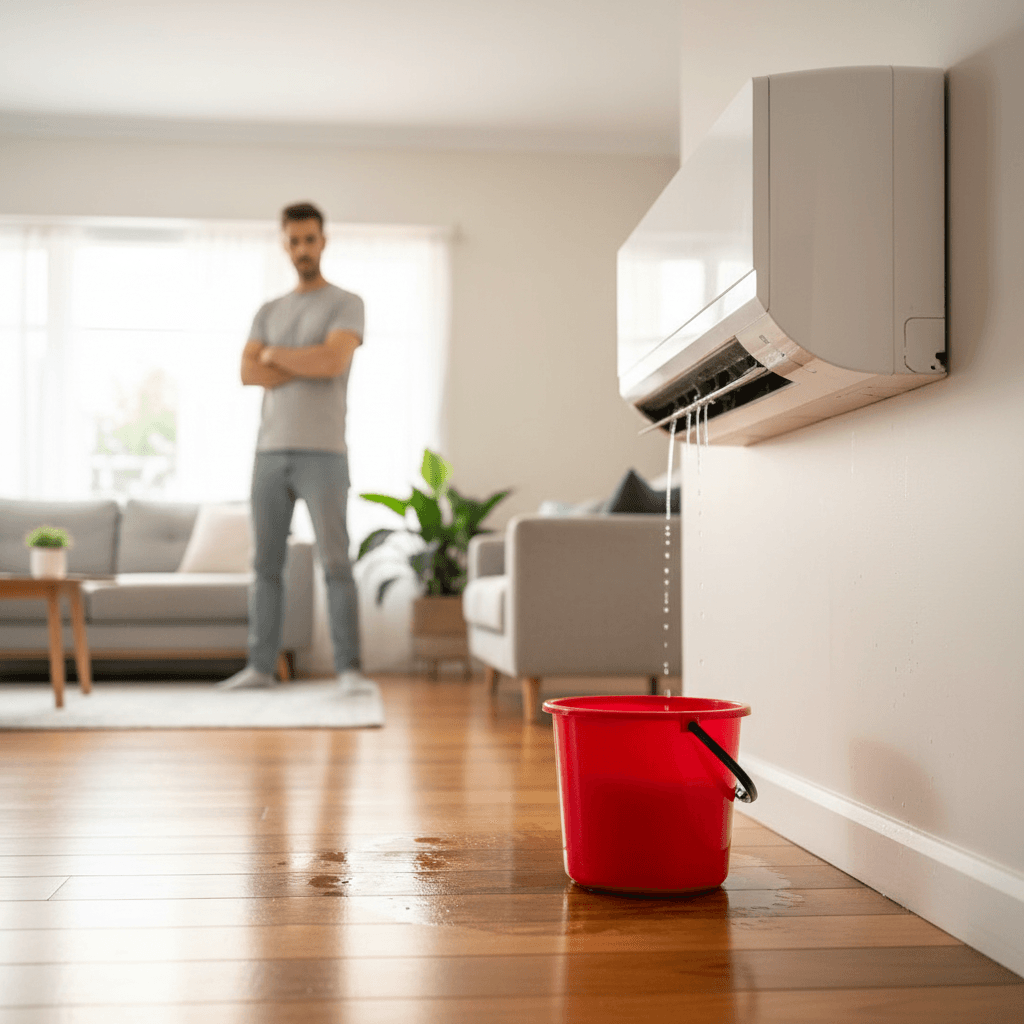
Why Your AC Is Leaking Water Inside
Air conditioning systems produce condensation as a normal part of their operation — warm, humid air passes over cold evaporator coils, and moisture condenses on the coils just like water droplets form on a cold glass. This condensation normally drips into a drain pan and flows out through a condensate drain line to outside your home. When water leaks inside instead, something in this drainage path has failed. In Brisbane's humid subtropical climate, AC units produce significantly more condensation than in drier climates, which makes drain line blockages more common and the potential leak volume larger. During Brisbane's humid months from November to March, a residential split system can produce 10 to 20 litres of condensation per day, all of which needs to drain properly.
The Most Common Cause: Blocked Drain Line
By far the most common cause of an AC leaking water inside a Brisbane home is a blocked condensate drain line. Over time, algae, mould, dust, and debris accumulate inside the small-diameter PVC drain pipe, gradually restricting flow until the water backs up and overflows the drain pan. Brisbane's warm, humid conditions accelerate this growth — what might take years in a dry climate happens in months here. You can sometimes clear a minor blockage yourself by locating the drain line exit outside your home (usually a small PVC pipe dripping water near the outdoor unit) and using a wet-dry vacuum to suction out the blockage. Pouring a cup of white vinegar into the drain pan monthly can help prevent algae growth. However, if the blockage is severe or you cannot locate the drain line, call an HVAC technician — they have specialised tools to flush the entire line.
- •Algae and mould growth in the condensate drain line
- •Brisbane's humidity accelerates drain line blockages
- •DIY: try suctioning the drain line exit with a wet-dry vacuum
- •Prevention: pour white vinegar into the drain pan monthly
- •Professional flush if blockage is severe or recurrent
Frozen Evaporator Coils
If your AC was blowing warm or weak air before the leak started, frozen evaporator coils may be the cause. When airflow over the coils is restricted — usually because of a dirty air filter, but also from blocked return air vents or a failing fan motor — the coils get too cold and ice forms on them. When you turn the AC off or the ice gets heavy enough, it melts and overwhelms the drain pan, causing water to leak inside. Check your air filter first — in Brisbane, filters should be cleaned every two to four weeks during heavy use (October to March). If the filter is clean and you still see ice on the coils, the issue may be low refrigerant (indicating a leak in the system) or a faulty fan motor, both of which require an HVAC technician.
- •Dirty air filter is the most common cause of coil freezing
- •Blocked return air vents restrict airflow and cause freezing
- •Clean filters every 2–4 weeks in Brisbane's hot months
- •Low refrigerant can also cause freezing — indicates a system leak
- •Turn off the AC and let ice melt before running it again
What to Do Right Now
If your AC is actively leaking water inside, take these immediate steps. Turn off the AC at the wall or the unit's remote — continuing to run it will produce more water. Place towels, a bucket, or a container under the leak to catch ongoing drips as residual water drains. Check and clean your air filter if you can access it. Mop up any standing water, paying special attention to water near electrical outlets or timber flooring which can warp. If you can safely access the indoor unit, check the drain pan for visible blockages. Call an HVAC technician if the problem is not a simple filter clean — in Brisbane, expect $150 to $300 for a drain line clear and $200 to $400 for coil and system diagnosis.
- •Turn off the AC immediately
- •Place towels or a bucket under the leak
- •Check and clean the air filter
- •Mop up standing water, especially near electrical outlets
- •Call HVAC technician: drain line clear $150–$300