
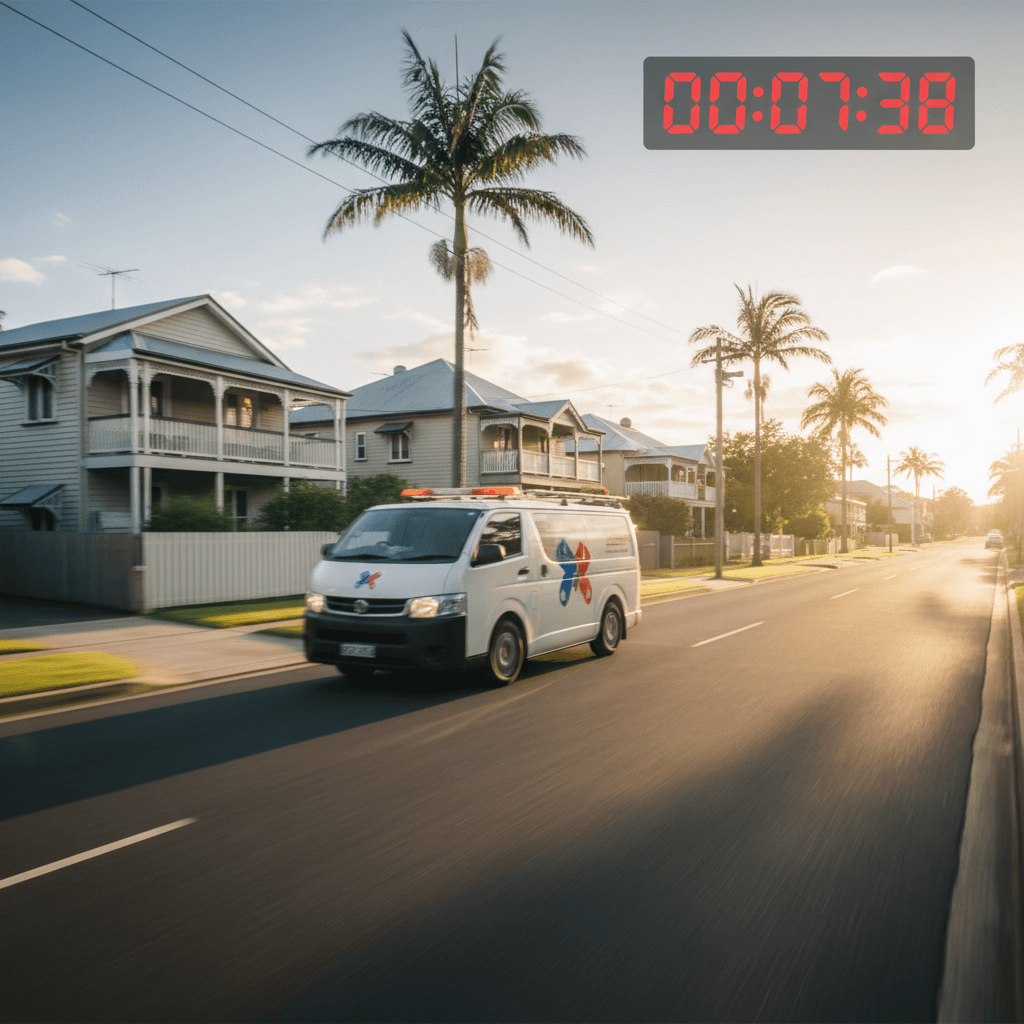
Average Response Times by Brisbane Area
Emergency plumber response times in Brisbane vary significantly depending on where you live and when you call. Inner-city suburbs — the CBD, South Brisbane, West End, Fortitude Valley, New Farm, Paddington, and Spring Hill — benefit from the highest concentration of plumbing businesses and can typically get a plumber on-site within 30 to 45 minutes during business hours. Middle-ring suburbs like Indooroopilly, Toowong, Chermside, Mount Gravatt, Kenmore, and Ashgrove typically see 45 to 60 minute response times. Outer suburbs and corridor areas — including the Ipswich corridor (Springfield, Goodna), the Redcliffe peninsula, Logan, and the Pine Rivers area — can wait 60 to 90 minutes, as fewer plumbers are based in these areas and travel distances are greater.
- •Inner city (CBD, South Brisbane, West End): 30–45 minutes
- •Middle ring (Indooroopilly, Chermside, Mt Gravatt): 45–60 minutes
- •Outer suburbs (Ipswich, Redcliffe, Logan): 60–90 minutes
- •These are averages for business hours calls
Factors That Affect Response Time
Several factors influence how quickly an emergency plumber can reach you. Time of day is the biggest factor — during business hours, more plumbers are active and available. After-hours (evenings, weekends, public holidays), fewer plumbers operate and they may be coming from further away, adding 15 to 30 minutes to typical response times. Weather events also matter enormously in Brisbane: during major storms or flooding events, plumber demand spikes dramatically while road conditions slow travel. After the 2022 floods, some Brisbane suburbs had wait times of 24 to 48 hours for non-critical plumbing. Peak demand periods like Christmas and Easter also extend wait times. Your ability to clearly describe the emergency helps too — a plumber can prioritise and prepare better when they understand the situation before arriving.
- •After-hours adds 15–30 minutes to response times
- •Storm events can increase wait times to hours or days
- •Christmas and Easter are peak demand periods
- •Clear description of the emergency helps plumbers prioritise
- •Having your address and access details ready saves time
How UrgentTradie Speeds Up Response Times
UrgentTradie's platform is designed to minimise the time between your call and a plumber arriving at your door. When you submit an emergency request, our system automatically matches you with available, verified plumbers in your suburb area — not the whole of Brisbane, but specifically those who are currently working nearby. This geo-matching approach means we are not sending a plumber from the northside to a southside job when there is someone closer available. Our verified plumbers commit to response time targets: 60 minutes maximum for inner Brisbane, 75 minutes for middle-ring suburbs, and 90 minutes for outer areas. If no one can meet these targets, we tell you honestly rather than leaving you waiting. We also provide real-time updates so you know when to expect your plumber.
- •Geo-matching connects you with nearby available plumbers
- •Inner Brisbane target: 60 minutes maximum
- •Middle ring target: 75 minutes maximum
- •Outer suburbs target: 90 minutes maximum
- •Real-time updates on plumber arrival
What to Do While Waiting for the Plumber
The time between calling and the plumber arriving is critical for minimising damage. For burst pipes or major leaks, turn off the water at the main shutoff valve (usually at the water meter near the front boundary of your property) and turn off your hot water system to prevent it running dry. For blocked drains and sewage backups, stop using water in the house — every flush and tap use adds water to the blocked system. For gas-related issues, turn off the gas at the meter and ventilate the house by opening windows. Place towels and buckets to catch any ongoing drips. Take photos of the damage for insurance purposes. Clear a path to the affected area so the plumber can get straight to work when they arrive.
- •Turn off water at the mains for leaks and bursts
- •Turn off the hot water system to prevent dry-running
- •Stop all water use for blocked drains and sewage backups
- •Ventilate the house for gas-related issues
- •Photograph damage for insurance records
- •Clear access to the problem area