
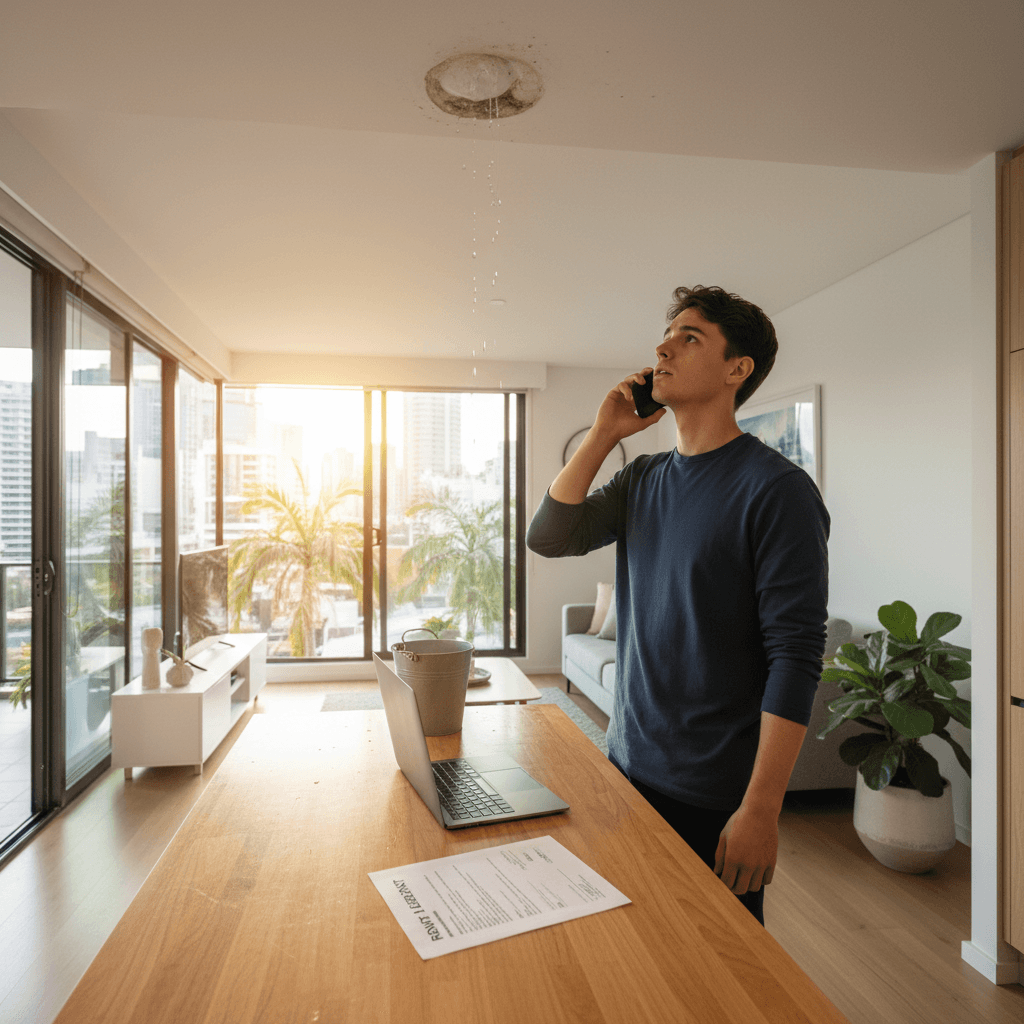
What Counts as an Emergency Repair in QLD
The Queensland Residential Tenancies and Rooming Accommodation Act 2008 defines emergency repairs as work needed to fix issues that make the property unsafe, unsecure, or uninhabitable. The legislation specifically lists: burst water pipes or serious water leaks, blocked or broken toilet systems, serious roof leaks, gas leaks, dangerous electrical faults, flooding or serious flood damage, serious storm or fire damage, failure or breakdown of the property's hot water, cooking, or heating system, failure of essential services (electricity, gas, water supply), and any fault or damage that makes the property unsafe or insecure (such as a broken external door lock). This is a broad definition that covers most genuine emergencies. Note that routine maintenance — a dripping tap, a slow drain, a flickering light — does not qualify as an emergency repair, even if it is annoying.
- •Burst water pipes or serious water leaks
- •Blocked or broken toilet systems
- •Serious roof leaks
- •Gas leaks
- •Dangerous electrical faults
- •Flooding or serious flood damage
- •Hot water, cooking, or heating system failure
- •Essential service failure (power, gas, water)
- •Broken external door lock or security failure
The Process: How to Get Emergency Repairs as a Tenant
When you have an emergency repair situation, follow this process. First, contact your property manager or landlord immediately. Call their office number and their after-hours emergency number. Send a text or email as well so you have a written record. If you cannot reach them within a reasonable time — and 'reasonable' depends on the severity of the emergency, but generally 30 minutes to a few hours — you can arrange the repair yourself. Under the Act, you can authorise emergency repairs up to the value of two weeks' rent without the landlord's prior approval. Choose a licensed, reputable tradie (UrgentTradie can connect you with one). Keep the receipt and a record of your attempts to contact the landlord. The landlord must reimburse you within seven days of receiving the receipt, or you can apply to the Queensland Civil and Administrative Tribunal (QCAT) for an order.
- •Contact property manager/landlord immediately (phone + written)
- •If unreachable for a reasonable time, you can arrange repairs
- •Maximum cost without landlord approval: two weeks' rent
- •Choose a licensed, reputable tradie and keep the receipt
- •Document all contact attempts with timestamps
- •Landlord must reimburse within 7 days of receiving the receipt
- •If they refuse, apply to QCAT for an order
Who Pays: The Clear Rules
The general rule in Queensland is simple: the landlord pays for all repairs and maintenance that are not caused by the tenant's negligence or deliberate damage. This applies to emergency repairs, routine maintenance, and wear-and-tear issues. The landlord cannot charge you for fixing a burst pipe (unless you caused it), replacing a failed hot water system, repairing dangerous wiring, fixing a blocked sewer (unless you caused the blockage), or replacing a broken lock on an external door. However, if the emergency was caused by something you did — for example, you flushed inappropriate items that blocked the toilet, or you overloaded a power circuit and damaged the wiring — the landlord may argue the cost should be shared or borne by you. In practice, the tenant's obligation is to use the property reasonably and report maintenance issues promptly. If you noticed a small leak three months ago and did not report it, and it has now become a burst pipe, the landlord may have grounds to dispute responsibility.
- •Landlord pays for all repairs not caused by tenant negligence
- •This includes emergency, routine, and wear-and-tear repairs
- •Tenant pays if damage was caused by their negligence
- •Tenant must report maintenance issues promptly
- •Delaying reports of known issues can affect your rights
What If Your Landlord Refuses to Pay or Delays?
Unfortunately, some landlords or property managers are slow to respond or refuse to reimburse emergency repair costs. If this happens, start with a formal written request for reimbursement, including copies of the receipt and your documented contact attempts. If the landlord refuses or does not respond within the seven-day reimbursement period, you can issue a Notice to Remedy Breach (Form 11) giving them seven days to comply. If they still do not pay, you can apply to QCAT for a tribunal hearing. QCAT can order the landlord to reimburse the cost and may award additional compensation if the landlord's failure to maintain the property caused you loss. The Residential Tenancies Authority (RTA) also provides free dispute resolution services that can help resolve the issue without going to tribunal. Keep all documentation throughout this process — your communication records, photos of the emergency, the tradie's receipt, and the Form 11.
- •Formal written reimbursement request with receipts attached
- •Notice to Remedy Breach (Form 11) if payment not received in 7 days
- •Apply to QCAT if landlord still refuses
- •RTA offers free dispute resolution as an alternative
- •Keep all documentation: communications, photos, receipts
- •QCAT can order reimbursement plus compensation for losses
Practical Tips for Brisbane Renters
As a Brisbane renter, these practical steps will protect you in an emergency. Save your property manager's office number, after-hours emergency number, and the landlord's direct contact in your phone now — not during the emergency. Keep a copy of your lease agreement accessible (photograph the key pages). Know the location of the water shutoff, switchboard, and gas meter in your property. When you move in, do a thorough condition report and photograph everything — this protects you if there is a dispute about pre-existing issues vs new damage. Report all maintenance issues in writing (email or your agency's maintenance portal) as soon as you notice them, and keep copies. If you need to arrange emergency repairs yourself, use UrgentTradie to connect with verified, licensed tradies who will provide proper receipts and documentation you can submit for reimbursement.
- •Save property manager office + emergency numbers in your phone
- •Keep a copy of your lease accessible (photos of key pages)
- •Know where water, electricity, and gas shutoffs are
- •Thorough condition report with photos at move-in
- •Report all maintenance issues in writing with timestamps
- •Use UrgentTradie for verified tradies with proper receipts