
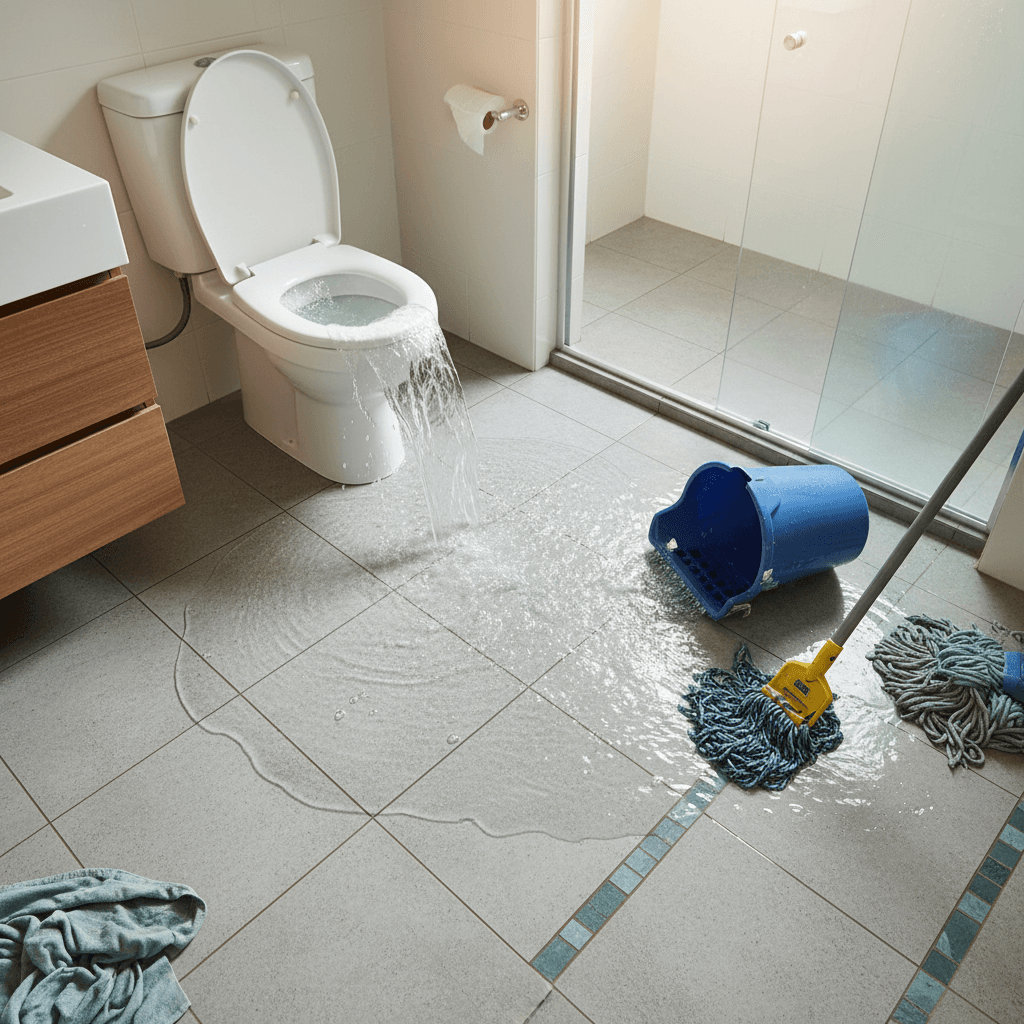
Step 1: Stop the Water Flow Immediately
The first thing to do when your toilet is overflowing is stop more water from entering the bowl. Look behind the toilet near the floor for a small tap or valve on the water supply line — turn it clockwise to shut it off. Most Brisbane homes have this isolation valve, though in older Queenslanders it may be stiff or corroded. If you cannot find or turn the valve, lift the cistern lid and manually lift the float ball or float cup upward — this closes the fill valve and stops water entering the cistern. As a last resort, turn off the main water supply to your home (usually at the water meter near the front boundary). Act quickly — every minute of overflow is more water on your floor, potentially seeping through to rooms below or into the subfloor.
- •Turn off the isolation tap behind the toilet (clockwise)
- •If no tap, lift the cistern lid and raise the float to stop filling
- •As a last resort, turn off the main water supply at the meter
- •Act within the first 30 seconds to minimise water damage
Step 2: Contain and Clean Up the Water
Once the water is stopped, focus on containing and cleaning up the overflow. Use old towels, mops, or a wet-dry vacuum to remove standing water from the floor. If the overflow has been significant, check the ceiling of the room below (if the toilet is upstairs) for water stains or dripping. Pay particular attention to water near electrical outlets or appliances — if water has reached any electrical fittings, do not touch them and turn off the circuit at the switchboard. In Brisbane's subtropical climate, any water-damaged areas need to be dried quickly to prevent mould growth, which can begin within 24 to 48 hours. Open windows and use fans to accelerate drying.
- •Mop up standing water immediately with old towels
- •Check ceiling below for water damage if toilet is upstairs
- •Keep water away from electrical outlets and appliances
- •Open windows and use fans to prevent mould growth
- •Disinfect the floor — toilet overflow water is contaminated
Step 3: Try a Plunger (The Right Way)
If the overflow was caused by a blockage, a plunger is your best DIY tool. Use a flange plunger (the type with an extended rubber flap) rather than a flat cup plunger — the flange creates a better seal in the toilet bowl. Place the plunger over the drain hole, ensuring it is fully submerged in water (add water to the bowl if needed — not by flushing). Push down slowly to expel air, then plunge vigorously up and down 15 to 20 times while maintaining the seal. Pull the plunger away sharply. If the water drains, the blockage is cleared — flush once to confirm. If the water does not drain after two or three plunging attempts, the blockage is likely deeper in the drain and you need a plumber with a drain snake or jet blaster.
- •Use a flange plunger, not a flat cup plunger
- •Ensure the plunger is submerged — add water if needed (do not flush)
- •Push down slowly first, then plunge vigorously 15–20 times
- •If two to three attempts fail, call a plumber
- •Never use chemical drain cleaners in a toilet — they rarely work and can damage pipes
When to Call an Emergency Plumber
Call an emergency plumber if the plunger does not clear the blockage, if the toilet overflows every time you flush (indicating a deeper blockage), if multiple fixtures are backing up (suggesting a main sewer line blockage), if you notice sewage smell or waste coming up through floor drains, or if the overflow has caused significant water damage. In Brisbane, an emergency plumber can typically reach you within 30 to 60 minutes and clear most toilet blockages with a drain snake or jet blaster for $150 to $400. Do not keep flushing a blocked toilet hoping it will clear — each flush sends more water onto your floor and increases the damage and cleanup cost.
- •Plunger fails after two to three attempts
- •Toilet overflows every time you flush
- •Multiple drains backing up simultaneously
- •Sewage smell or waste from floor drains
- •Significant water damage already occurred