
Does Brisbane Really Need Winter Heating?
While Brisbane's winters are mild compared to Sydney or Melbourne, early mornings in June and July regularly drop to 5 to 10 degrees Celsius, and overnight lows in western suburbs like The Gap, Kenmore, and Brookfield can dip below 5 degrees. Most Brisbane homes are designed for summer cooling rather than winter warmth, with large windows, high ceilings, and limited insulation. This means indoor temperatures can feel uncomfortably cold in winter, especially in older homes. If you have a reverse-cycle air conditioner (which most Brisbane homes do), it doubles as an efficient heater. Getting it serviced before winter ensures it works well in heating mode.
- •Brisbane winter mornings regularly drop to 5–10°C
- •Western suburbs can dip below 5°C overnight
- •Most Brisbane homes are built for summer, not winter comfort
- •Reverse-cycle AC is the most efficient heating option
- •Service before winter — heating mode has different demands than cooling
Heat Pump and Reverse-Cycle AC Winter Check
A reverse-cycle air conditioner uses a heat pump to extract warmth from outdoor air and bring it inside. In heating mode, the outdoor unit becomes the evaporator, which means it can ice up in cold, humid conditions. Before winter, check that the defrost cycle is functioning correctly — this is something a technician will test during a service. Also check that the heating mode is working by running the system in heat for 15 minutes and verifying warm air comes out. If the unit struggles to heat or makes unusual noises in heating mode, book a service. A winter HVAC service costs $120 to $250 for a split system.
- •Test heating mode for 15 minutes — verify warm air output
- •Check the defrost cycle is functioning (technician will test this)
- •Listen for unusual noises in heating mode
- •Winter service cost: $120–$250 for a split system
- •Book in April or May before the cold sets in
Duct Cleaning and Insulation Check
For ducted systems, winter is a good time to check duct insulation. In Brisbane's humid climate, poorly insulated ducts in the roof space can develop condensation issues, leading to mould growth and reduced efficiency. A professional duct inspection costs $150 to $300 and can identify leaks, damaged insulation, and blockages. Full duct cleaning costs $300 to $600 for a standard three-bedroom home and removes accumulated dust, allergens, and mould that can cause respiratory issues. If your ducts have not been cleaned in 5 or more years, it is worth doing — the improvement in air quality and system efficiency is noticeable.
- •Duct inspection: $150–$300
- •Full duct cleaning: $300–$600 (3-bedroom home)
- •Check duct insulation for damage and condensation
- •Leaky ducts can waste 20–30% of your heating energy
- •Clean ducts every 3–5 years for best air quality
Thermostat Programming and Energy Efficiency
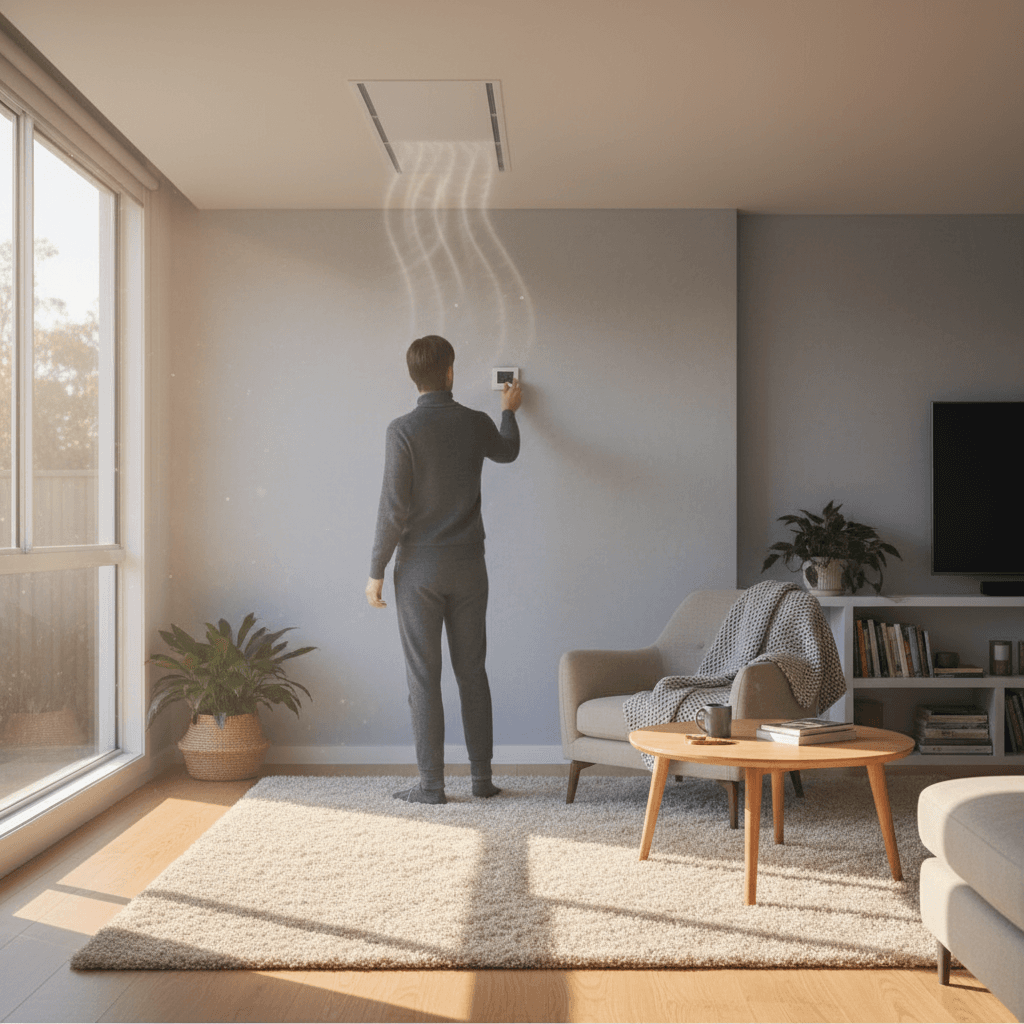
Smart thermostat programming can significantly reduce your winter heating bills. Set your heating to 18 to 20 degrees Celsius — every degree above 20 adds roughly 10% to your heating costs. Use a timer to heat the house 30 minutes before you wake up and turn off when you leave for work, then turn on again 30 minutes before you return home. If you have a zoned ducted system, only heat the rooms you are using. Close doors to unused rooms. Other efficiency tips include sealing gaps around doors and windows with draught stoppers, using ceiling fans on the reverse (clockwise) setting to push warm air down, and keeping curtains open during the day to let in solar warmth, then closing them at dusk to trap heat.
- •Set heating to 18–20°C — each degree above adds ~10% to costs
- •Use timers to avoid heating an empty house
- •Zone heating: only heat rooms you are using
- •Seal gaps around doors and windows with draught stoppers
- •Run ceiling fans clockwise on low to push warm air down
- •Open curtains during the day; close at dusk to trap warmth